Results for INCREDIBLE

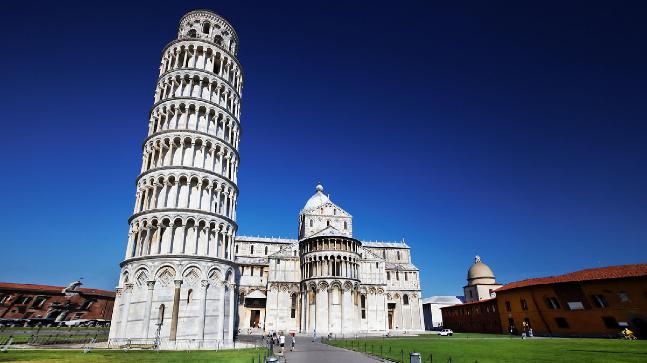
Leaning Tower Of Pisa

September 21, 2019
Image result for Tower Of Pisa

The twelfth century was a decent one for Pisa; the city's military, business, and political significance developed as their once little seaport turned into a territorial powerhouse. Like any prosperous medieval Italian city, Pisa started to put its new riches in the development great structures. In the wake of sacking Palermo in 1063 the regional government required a spot to show the majority of the fortunes that explorers had brought over from Sicily so they chose to build the "Field of Miracles" which would in the end be home to a Cathedral, Baptistery, burial ground, and one extremely tall chime tower. Truth be told, the chime tower was intended to be the tallest of its age and likely would have been if conditions hadn't messed up the works.

The lean didn't occur without any forethought

Given that the name "Pisa" originates from the Greek word for "mucky land" you would imagine that the house of prayer's engineers would have considered the subsoil while building an extremely tall chime tower. They didn't. By giving the pinnacle a shallow and moderately substantial establishment, they unintentionally bound it from the start. Yet, it wasn't until the subsequent story was being constructed that the pinnacle started to sink on one side. Lamentably, by then it was past the point where it is possible to turn back. As development proceeded with the manufacturers attempted to balance their error by including taller sections and curves the south side of the pinnacle. In any case, when they arrived at the fourth story (out of an arranged 8) they needed to make the curves on the south side an entire two inches taller than those on the north and the pinnacle still kept on inclining. Uncertain of what to do straightaway, the developers ended development for just about a century.

The pinnacle has inclined in various ways

Different architects attempted, more than many years to address the popular lean. At the point when development started again on the third story in the thirteenth century, engineers attempted to stop the tilt by structure straight upwards, however the focal point of gravity was lost and the pinnacle essentially started to lean an alternate way. As development proceeded with the pinnacle in the long run settled once more into its southward tilt, where it has stayed from that point forward.

The lean makes some fascinating awkward nature

The inclining tower of Pisa should be 60 meters tall (196.85 feet). After the lean, be that as it may, the most astounding side of the pinnacle arrives at a simple 56.67 meters (around 186 feet), while the least side is 55.86m, or 183 feet.

By 1990 the pinnacle had arrived at a tilt of 5.5 degrees – almost 15 feet from its base and enough to topple it over by generally estimations! Fortunately, this extensive tilt was sufficient to beat the world-renowned latency of Italian administration and kick start an enormous reclamation program that decreased the tilt to *only* 3.97 degrees. In view of the pinnacle's unique rundown, the north side staircase has something like 296 stages to the top, while the south side has only 294.

Wars and monetary struggle may have spared the pinnacle

Obligation and war ordinarily have not been helps to incredible development extends in Italy, yet on account of the Leaning Tower of Pisa, they may have recently been a redeeming quality. Some auxiliary specialists speculate that proceeded with postponements in development more than 200 years may have given the dirt underneath the as of now marginally inclining pinnacle time to pack, at last sparing it from toppling over.

You can move to the top

Truth is stranger than fiction – the most well known basically unsound structure on the planet is available to guests. Genuinely however, since its rebuilding and slight un-tilting, the structure's trustworthiness is checked always and the structure has huge quantities of guests consistently. On the off chance that you need to move to the top you should book tickets ahead of time.

The pinnacle has endure hundreds of years of benevolent however misinformed endeavors to right it, including different architects who included levels and curves of every single diverse stature and one overeager gathering who burrowed around the pinnacle to open an underground visit (which just filled the territory with considerably more water). However, somebody at long last hit the nail on the head in the 21st century and starting at 2001, the pinnacle was authoritatively announced stable for at any rate the following 200 years. In 2008 specialists found that the pinnacle is formally never again moving – the first run through in quite a while history that it hasn't been gradually inclining to the other side. quite a while from now.
Leaning Tower Of Pisa Leaning Tower Of Pisa Reviewed by rathore on September 21, 2019 Rating: 5

Sydney Opera House

September 21, 2019
Image result for sydney opera house

The Sydney Opera House is arranged on Bennelong Point (initially called Cattle Point), a projection on the south side of the harbor only east of the Sydney Harbor Bridge. It was named for Bennelong, one of two Aborigines (the other man was named Colebee) who filled in as contacts between Australia's first British pilgrims and the neighborhood populace. The little building where Bennelong lived once involved the site. In 1821 Fort Macquarie was worked there (annihilated 1902). In 1947 the occupant director of the Sydney Symphony Orchestra, Eugene Goossens, recognized the need of Australia's driving city for a melodic office that would be a home not exclusively to the ensemble yet additionally to show and ambiance music gatherings. The New South Wales government, concurring that the city ought to try to acknowledgment as a world social capital, gave official endorsement and in 1954 met a warning gathering, the Opera House Committee, to pick a site. Early the next year the advisory group suggested Bennelong Point.

In 1956 the state government supported a universal challenge for a plan that was to incorporate a structure with two corridors—one principally for shows and other enormous melodic and move preparations and the other for emotional introductions and littler melodic occasions. Engineers from nearly 30 nations submitted 233 sections. In January 1957 the making a decision about panel declared the triumphant passage, that of Danish draftsman Jørn Utzon, who won with a sensational plan demonstrating a complex of two fundamental corridors one next to the other looking out to the harbor on a huge platform. Every corridor was topped with a column of sail-formed interlocking boards that would fill in as both rooftop and divider, to be made of precast cement.

His triumphant passage brought Utzon universal notoriety. Development, in any case, which started in 1959, represented an assortment of issues, many coming about because of the imaginative idea of the structure. The opening of the Opera House was initially gotten ready for Australia Day (January 26) in 1963, yet cost invades and auxiliary building challenges in executing the plan disturbed the course of the work, which confronted numerous postponements. The venture became dubious, and general conclusion betrayed it for a period. In the midst of proceeding with conflicts with the administration specialists supervising the undertaking, Utzon surrendered in 1966. Development proceeded until September 1973 under the supervision of the auxiliary designing firm Ove Arup and Partners and three Sydney planners—Peter Hall, David Littlemore, and Lionel Todd.
Sydney Opera House Sydney Opera House Reviewed by rathore on September 21, 2019 Rating: 5

Statue of Liberty

September 21, 2019
Image result for Statue of Liberty,

Statue of Liberty, officially Liberty Enlightening the World, enormous statue on Liberty Island in the Upper New York Bay, U.S., celebrating the companionship of the people groups of the United States and France. Standing 305 feet (93 meters) high including its platform, it speaks to a lady holding a light in her lifted right hand and a tablet bearing the reception date of the Declaration of Independence (July 4, 1776) in her left. The light, which estimates 29 feet (8.8 meters) from the fire tip to the base of the handle, is available by means of a 42-foot (12.8-meter) administration stepping stool inside the arm (this rising was available to general society from 1886 to 1916). A lift conveys guests to the perception deck in the platform, which may likewise be come to by stairway, and a winding staircase prompts a perception stage in the figure's crown.

A French history specialist, Edouard de Laboulaye, made the proposition for the statue. Assets were contributed by the French individuals, and work started in France in 1875 under stone carver Frédéric-Auguste Bartholdi. The statue was developed of copper sheets, pounded into shape by hand and collected over a system of four huge steel underpins, planned by Eugène-Emmanuel Viollet-le-Duc and Alexandre-Gustave Eiffel. The monster was introduced to the American pastor to France Levi Morton (later VP) in a function in Paris on July 4, 1884. In 1885 the finished statue, 151 feet 1 inch (46 meters) high and weighing 225 tons, was dismantled and delivered to New York City. The platform, planned by American modeler Richard Morris Hunt and worked inside the dividers of Fort Wood on Bedloe's Island, was finished later. The statue, mounted on its platform, was committed by President Grover Cleveland on October 28, 1886. Throughout the years the light experienced a few adjustments, including its transformation to electric power in 1916 and its update (with repoussé copper sheathed in gold leaf) in the mid-1980s, when the statue was fixed and reestablished by both American and French specialists for a centennial festival held in July 1986. The site was added to UNESCO's World Heritage List in 1984.
Statue of Liberty Statue of Liberty Reviewed by rathore on September 21, 2019 Rating: 5
Wulingyuan

September 21, 2019

Image result for Wulingyuan

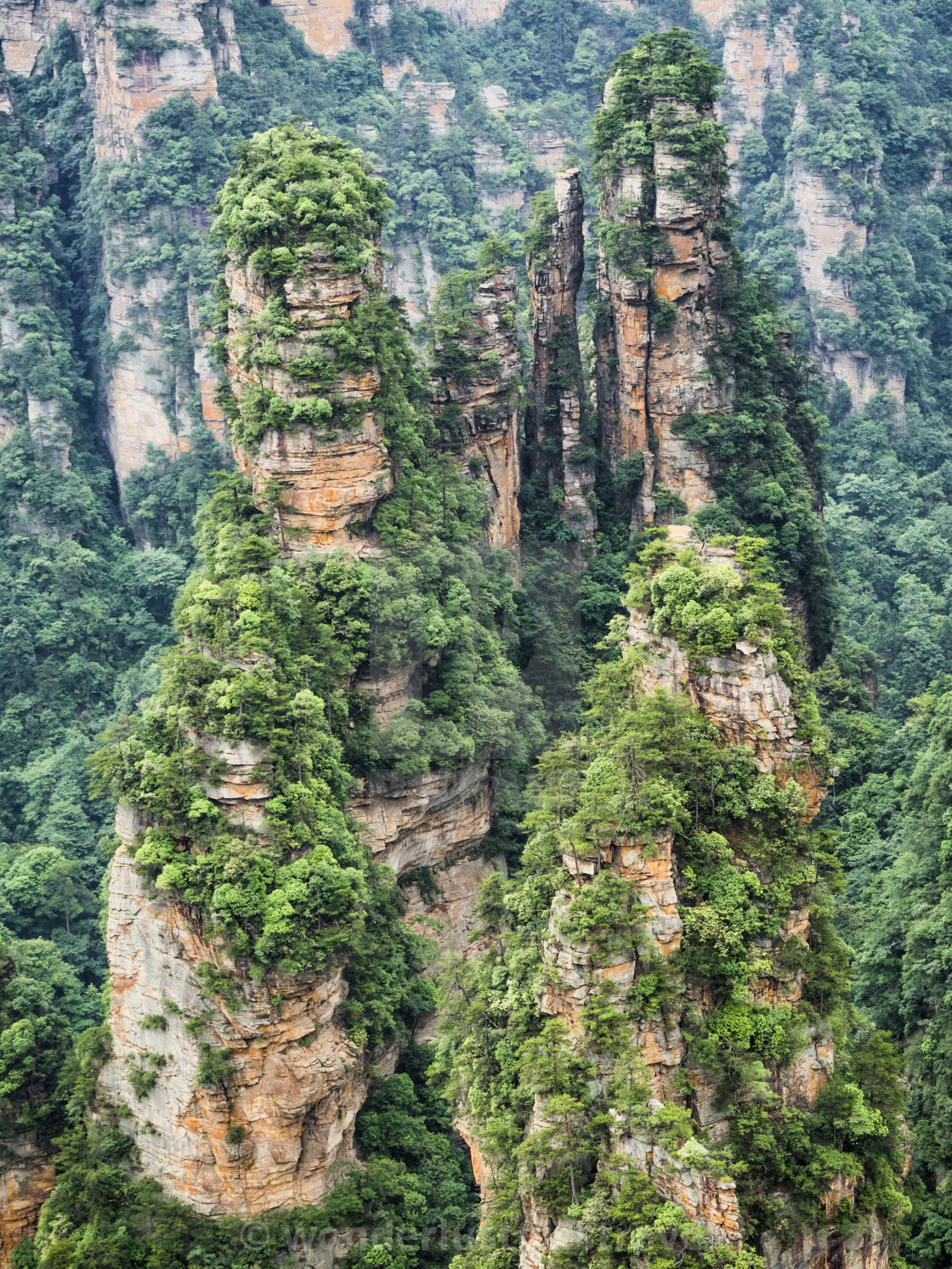
Wulingyuan Chinese is a picturesque and recorded site in the Wulingyuan District of south-focal China's Hunan Province. It was engraved as an UNESCO World Heritage Site in 1992. It is noted for in excess of 3,000 quartzite sandstone columns and crests crosswise over the greater part of the site, numerous more than 200 meters (660 ft) in tallness, alongside numerous gorges and crevasses with appealing streams, pools, lakes, waterways and waterfalls. It highlights 40 caverns, numerous with huge calcite stores, and a characteristic scaffold named Tianqiashengkong (Bridge Across the Sky, which is one of the most astounding common extensions on the planet.

The site is arranged situated in Zhangjiajie City and lies around 270 kilometers (170 mi) toward the northwest of Changsha, the capital of Hunan Province. The recreation center covers a zone of 690 square kilometers (266 square miles).Wulingyuan structures some portion of the Wuling Mountain Range. The grand zone comprises of four national parks, which are the Zhangjiajie National Forest Park, Suoxi Valley Nature Reserve, Tianzi Mountain Nature Reserve and the as of late included Yangjiajie Scenic Area. In general there are more than 560 fascination sights to see.

The most elevated zone in the recreation center is Huang Shi Zhai. It arrives at a stature of 3,450 feet (1,050 m) It is available by means of link vehicle or a lot of stairs.
Wulingyuan Wulingyuan Reviewed by rathore on September 21, 2019 Rating: 5

The Vatican City

September 21, 2019
Image result for The Vatican CityVatican City (Città del Vaticano in Italian) is an autonomous city state situated in the core of Rome, led by the Pope (Bishop of Rome). It is the focal point of power over the Roman Catholic Church.

The Vatican is the littlest state in Europe. It has an absolute territory of 0,44 km² and inside its divider live roughly 1000 individuals.

In this little state experience the Pope, in the Apostolic castle encompassed by delightful nurseries. The royal residence is available to general society, however guests need to book ahead of time.

The Vatican City was proclaimed free from the remainder of Italy on 11 February, 1929, with the marking of the Lateran Treaty between Pope Pius XI and Mussolini.

Top fascination in Vatican City

Inside the Vatican there are various fascinating attractions to visit, however the best are the accompanying: St. Subside's Square (Piazza San Pietro), St. Diminish's Basilica and the Vatican Museums, where the Sistine church is found.
The Vatican City The Vatican City Reviewed by rathore on September 21, 2019 Rating: 5
Powered by Blogger.